

Katharina Wulff
Arabesques in Arabesques
Artist
- Katharina Wulff
Curator
- Christina Lehnert
Curatorial assistance
- Joachim Rautenberg
Katharina Wulff Arabesken in Arabesken
↓ Booklet Kathrina Wulff (9.47 MB)Supported by the Ministry of Science, Research and the Arts Baden-Württemberg

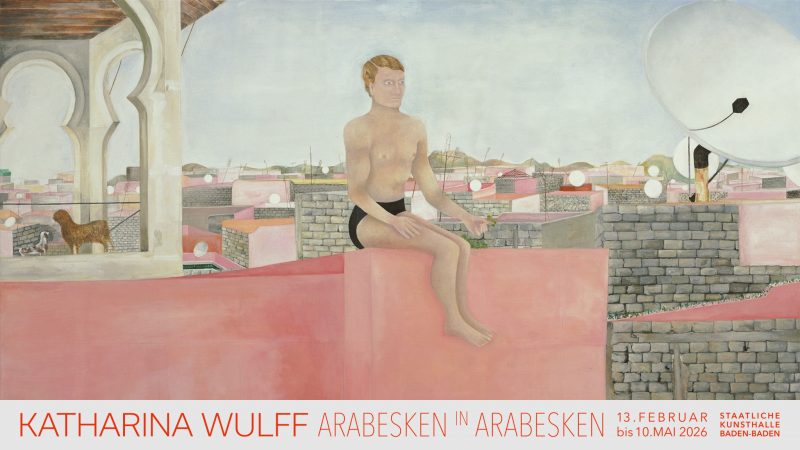
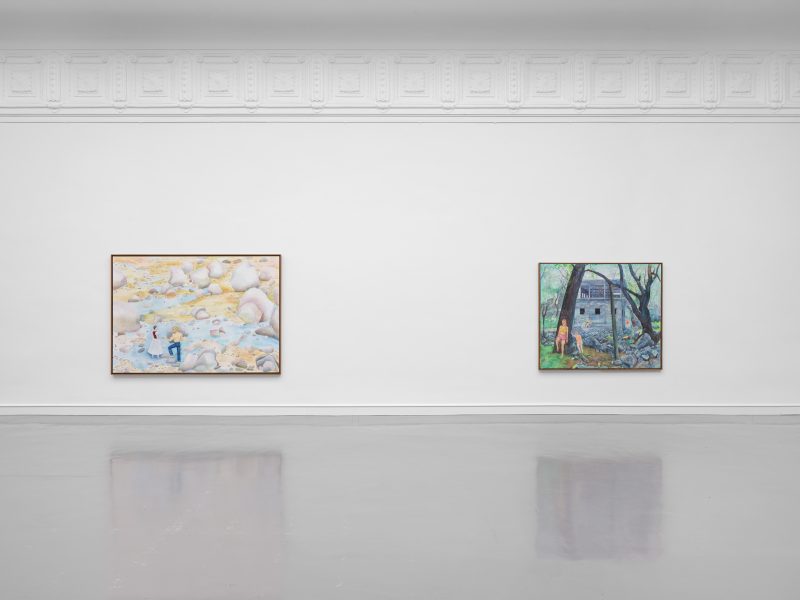
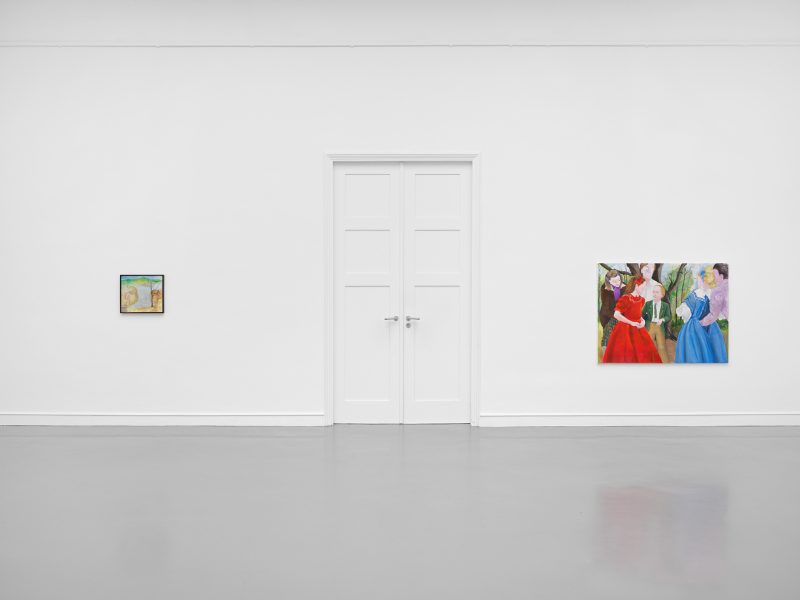
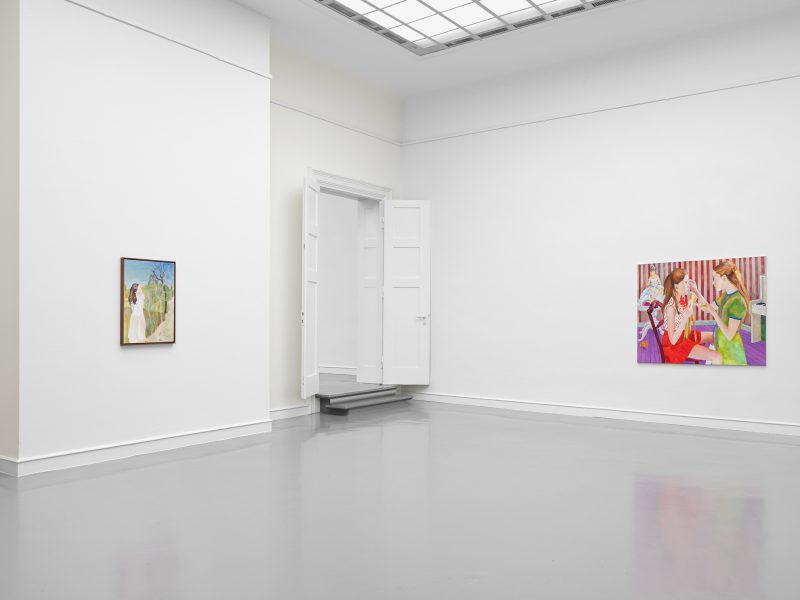
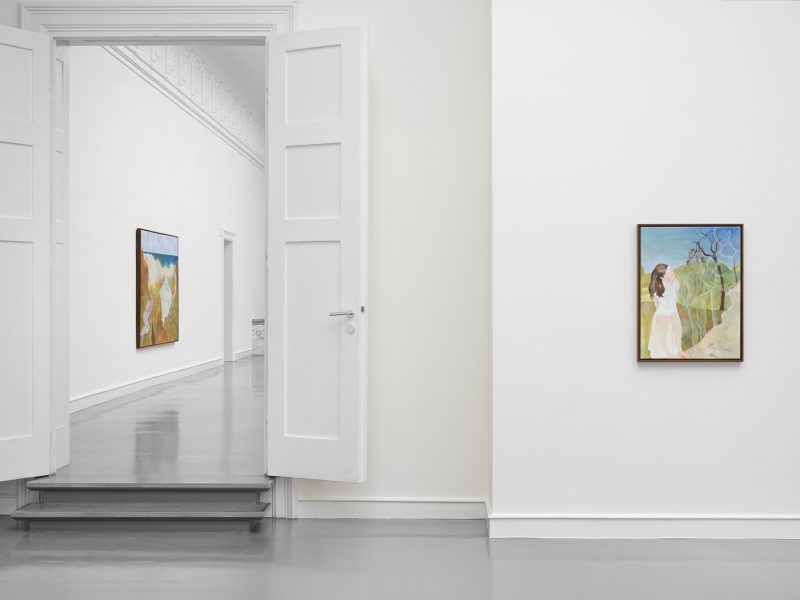
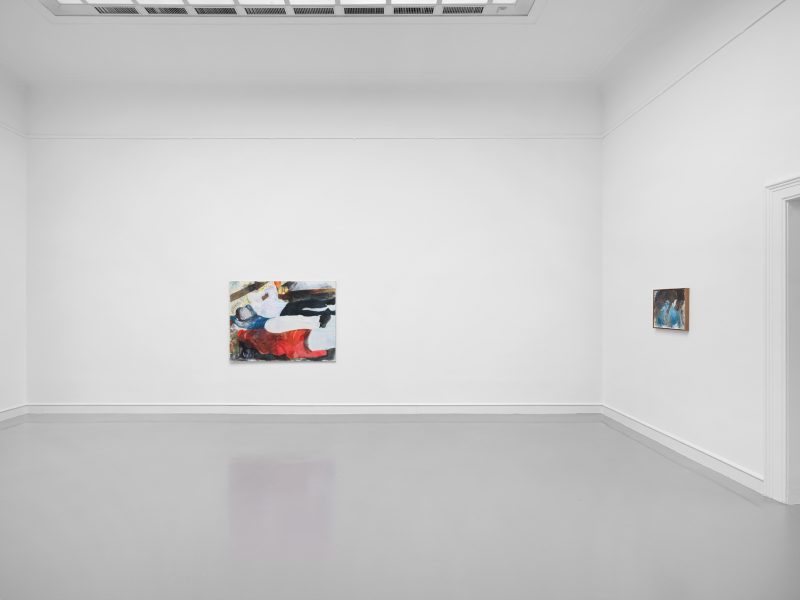
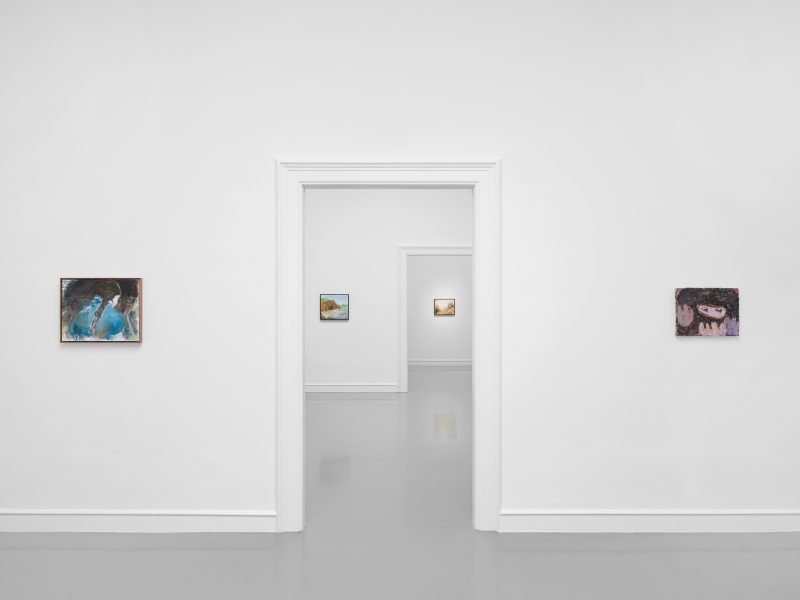
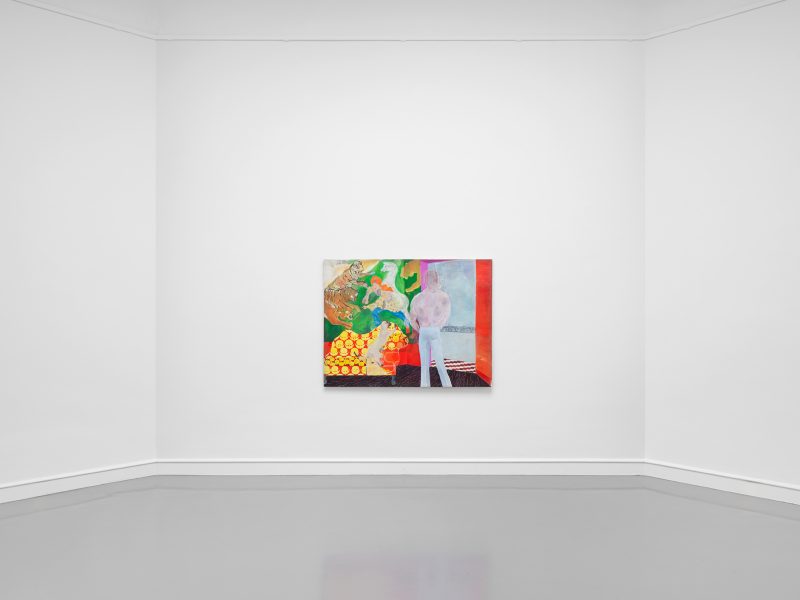
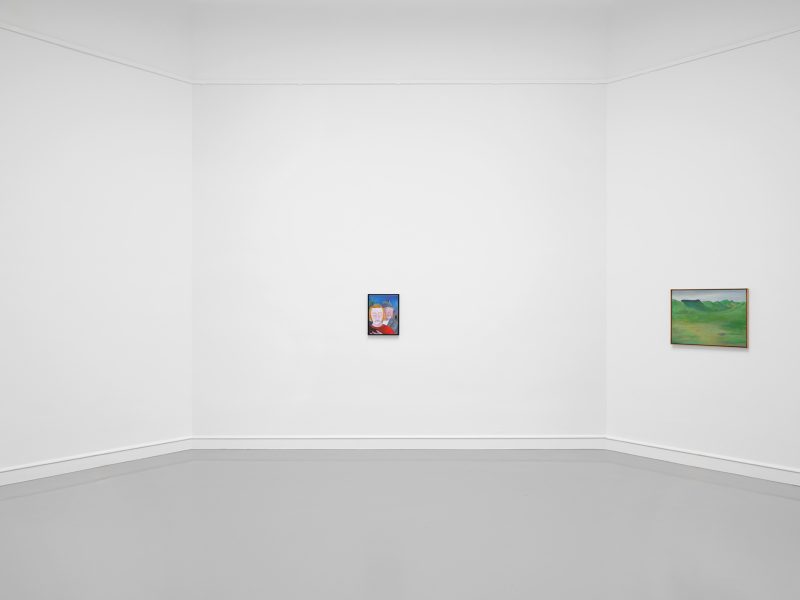
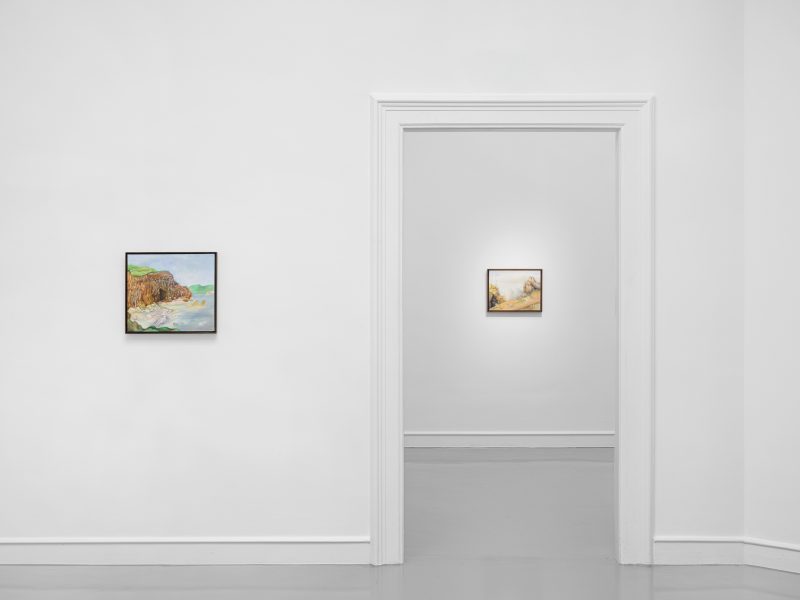
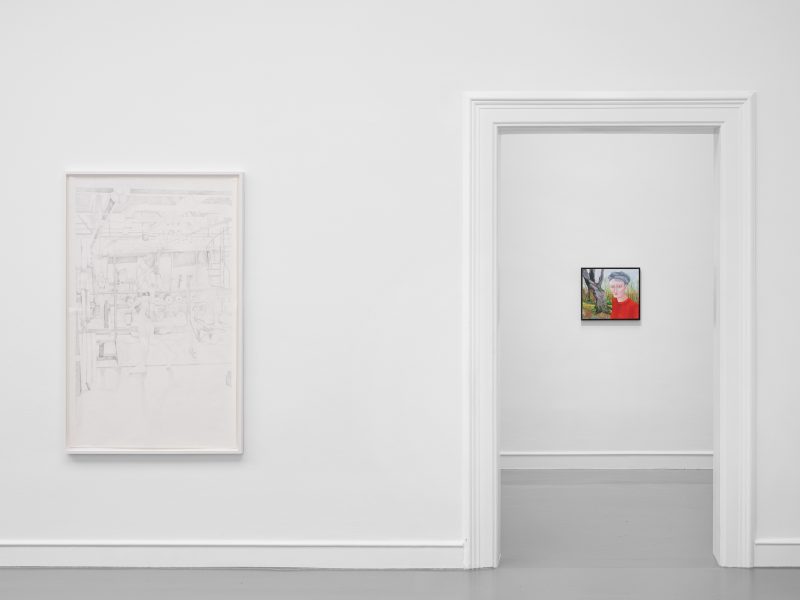
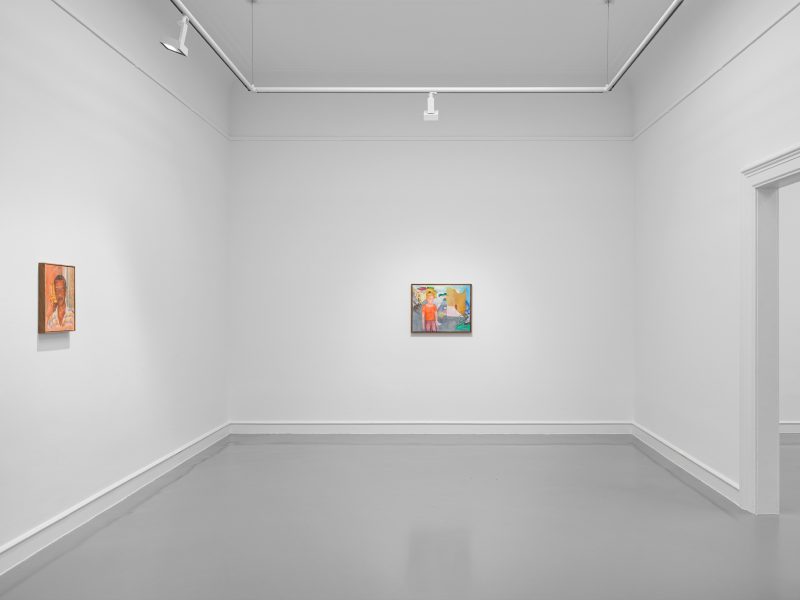
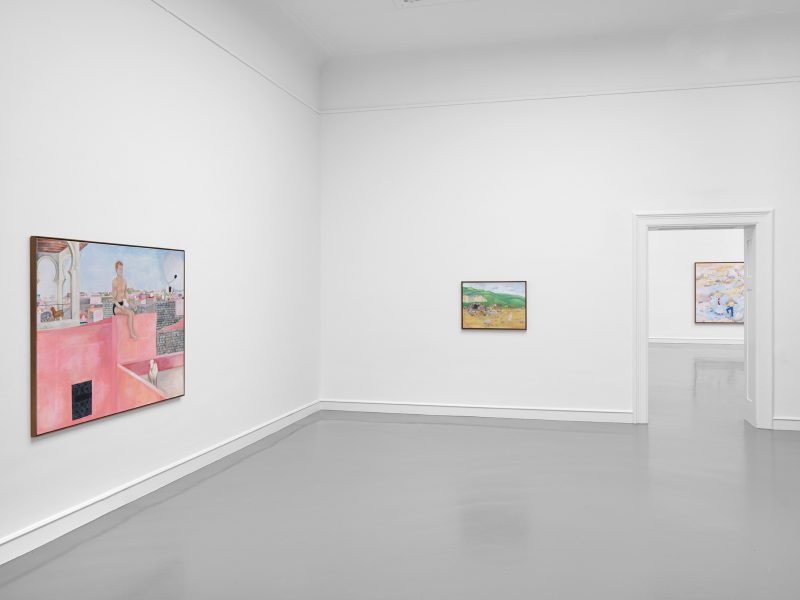
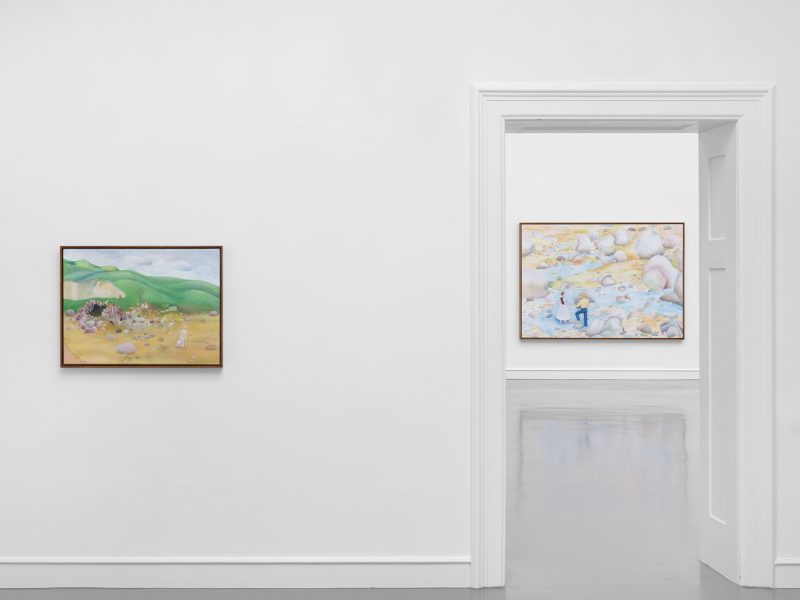
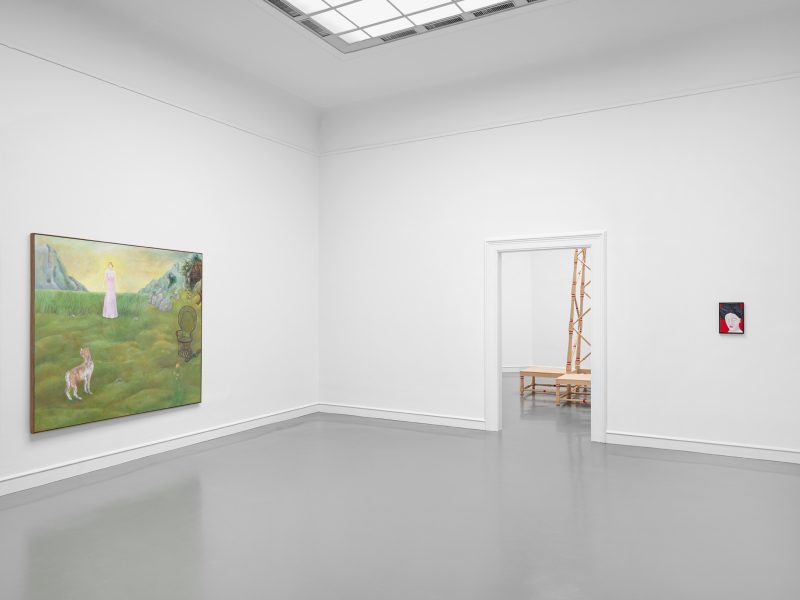
The Staatliche Kunsthalle Baden-Baden presents the most comprehensive exhibition to date of the painter Katharina Wulff (*1968, Berlin). Featuring paintings, drawings, and architectural works from more than three decades of her artistic practice, the exhibition offers an in-depth view of her oeuvre. Wulff’s carefully composed tableaux of everyday scenes combine precise observation with a contemporary form of realism. Her works reflect a sustained interest in landscapes, architecture, and people—their social roles, styles of dress, attributes, postures, and movements.
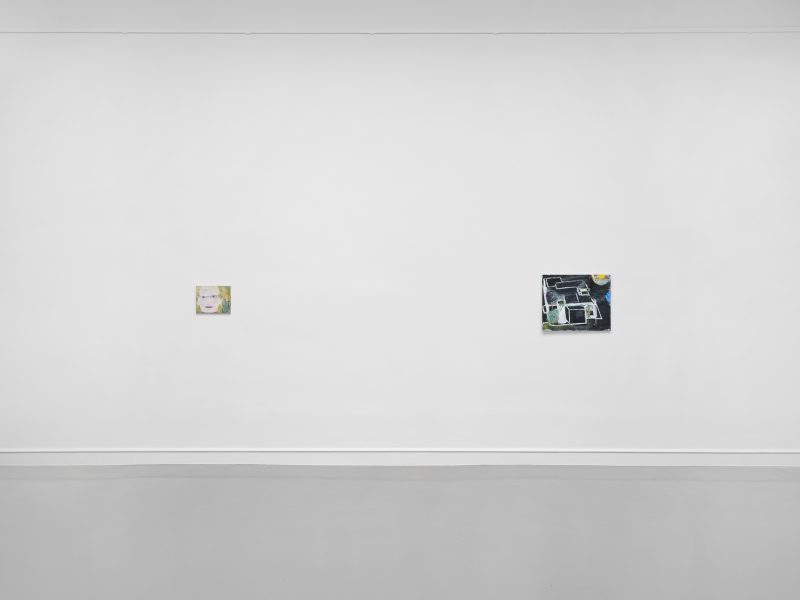
With 40 paintings and drawings, the exhibition provides a focused overview of a body of work shaped by Wulff’s youth in East Berlin, the Berlin art scene of the 1990s, and the cultural transitions of the societies in which she has lived and worked for many years. These impulses are taken up individually or interwoven in a complex interplay of past and present, often centering on a figure positioned either at the margins or at the heart of a narrative or portrait—at times an observer, at times an active participant in the scene.
The repeated incorporation and layering of such encounters, archival materials, and memories lends Wulff’s works a timeless quality and opens up an immediate access to her visual worlds. Her compositions arise from the construction of relationships—of scale, proximity, and perspective; between landscape and city, human beings and architecture; and equally within the social realm, in humanity’s relationship to the world around it.
Since the early 1990s, Wulff has developed a body of work distinguished by a particular sensitivity to the possibilities of figurative painting, as well as by a keen awareness of social dynamics and cultural conditioning.
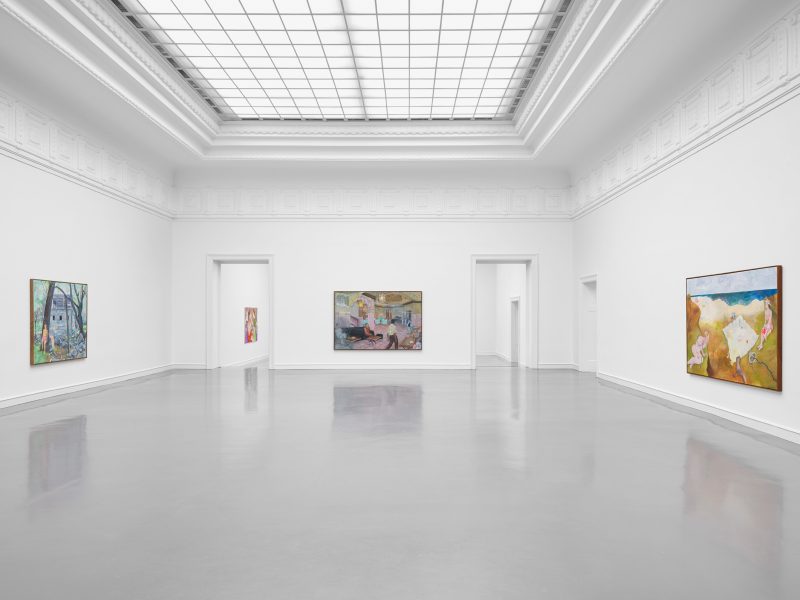
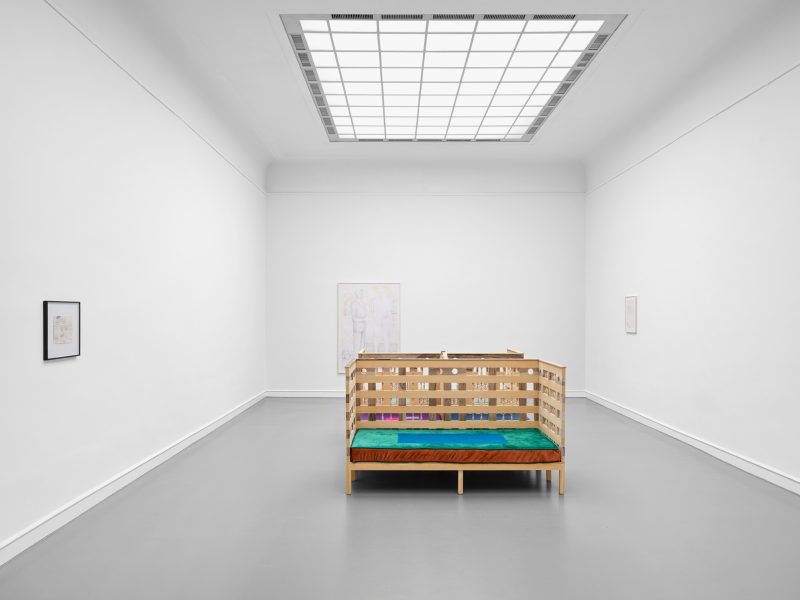
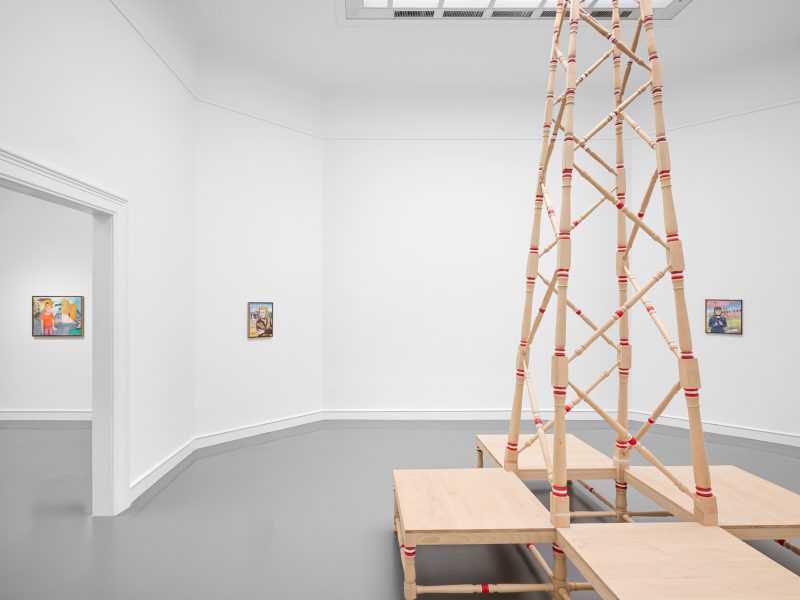
The exhibition title refers to the arabesque as a non-figurative ornamental form composed of interlacing tendrils, used especially in Arabic architecture to decorate pilasters and friezes. For the exhibition, Wulff designed two new benches whose forms and ornaments echo the architectures found in her paintings. The opulence and scent of the cedar wood create a striking contrast to the neoclassical building of the Kunsthalle Baden-Baden and its characteristic sequence of gallery spaces.
Katharina Wulff: Grand Hotel Tazi, 2016. Courtesy:the artist and Galerie Neu, Berlin
Katharina Wulff: The Woolgatherer / Der Tagträumer, 2005. Courtesy the artist, Sammlung Alexander Schröder
Katharina Wulff, Arabesques in Arabesques, 2026, installation view © Staatliche Kunsthalle Baden-Baden, Stefan Altenburger Photography, Zürich
Curated program
Vernissage
Katharina Wulff – Arabesques in Arabesques
Curators' tour
Katharina Wulff - Arabesques in Arabesques
Public guided tour
Katharina Wulff – Arabesques in Arabesques
Guided Tour - Bring your Baby-Tour
Experience the exhibition with your baby
Conversation on the Exhibition: Katharina Wulff – Arabesques in Arabesques
Evening event followed by an apéritif